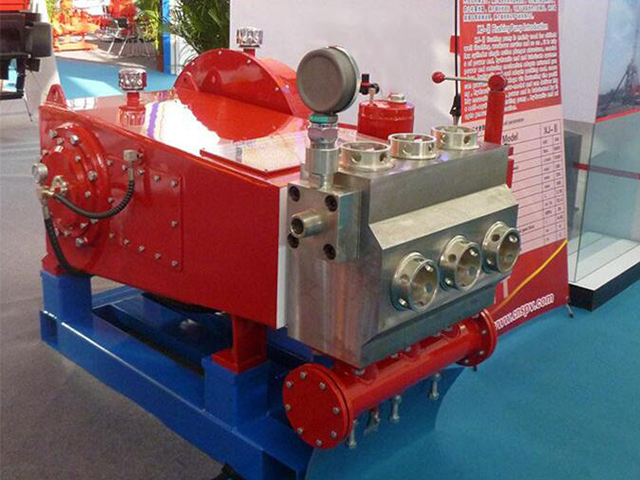
Identify the existing pump completely
Collect the manufacturer, model, serial number and available configuration records for the installed pump. Record previous modifications and the current plunger and packing arrangement. Photographs are helpful for orientation, but they do not establish dimensions or internal details. If original records are missing, agree a documented survey and review process before requesting a fixed replacement commitment based only on an appearance or a familiar model name.
Control the power-end and piping interfaces
Submit the mounting, extension-rod, plunger connection and suction and discharge drawings required for the replacement review. Identify measurement datums and tolerances where applicable. Ask the supplier to mark confirmed interfaces and unresolved dimensions on its proposed drawing. A statement that a fluid end fits a model family should not override differences in revisions, accessories or installed piping that affect the actual equipment.
Confirm the intended service after replacement
State the required pressure-flow cases, liquid properties, temperature and running schedule. Check that the proposed fluid end, plungers, valves and packing support that duty within the accepted power-end limits. Replacing the pressure-containing assembly does not automatically increase the capability of the complete pump. Any intended uprating needs coordinated review of mechanical load, drive power, piping, protective devices and the supporting system before it becomes part of the order.
Define the supplied assembly and reusable parts
Specify whether the replacement includes valves, seats, covers, seals, packing, plungers, fasteners and connection accessories. Identify parts proposed for reuse and require their condition and compatibility to be assessed. Compare assembly scope carefully: a lower-priced body-only offer may leave essential components unpriced. Ask for a tagged bill of materials and clear responsibility for assembly, installation and the verification of the final combination.
Agree inspection and acceptance before manufacture
Request the applicable material records, dimensional checks, pressure-test scope and preservation requirements. Confirm how fit-critical dimensions will be verified and what constitutes acceptance at the factory and on site. Keep test conditions tied to the supplied assembly rather than assuming that a generic certificate covers every component. Require updated replacement-part identifiers and maintenance instructions so future orders refer to the delivered configuration rather than the retired assembly.
Treat compatibility as a documented conclusion
Use an interface review signed by the responsible parties and attach the accepted drawing revision to the purchase order. Record allowable installation changes and items that must remain unchanged. Where an alternative supplier proposes a different design, assess the engineering consequences instead of describing it as an exact replacement without evidence. Commercial references to another manufacturer identify the existing equipment only; they do not establish authorization, brand affiliation or guaranteed interchangeability of the proposed assembly.
Put these items side by side in the bid review
| Purchase item | Question to resolve | Evidence to request |
|---|---|---|
| Fit | Which drawing revision was checked? | Accepted interface review |
| Duty | Does the complete pump support the change? | Coordinated rating review |
| Scope | Body only or assembled fluid end? | Tagged bill of materials |
Suggested wording for the quotation request
Please propose a replacement fluid end for the identified triplex pump using the attached configuration records and controlled interface drawings. Confirm fit-critical dimensions, accepted liquid and pressure-flow duty, supplied components and parts proposed for reuse. List deviations and required installation changes. Provide material, dimensional and test evidence, preservation instructions and replacement-part identifiers. Any interchangeability claim must reference the actual reviewed interfaces rather than a general model-family description.
Evaluate the offered pump within its complete operating system: feed supply, pressure piping, prime mover, lubrication, controls and maintenance access. Record the liquid properties, simultaneous pressure and flow points, speed range and expected running hours. Keep the accepted limits and supporting drawings with the purchase order. A bare-pump rating does not establish the capability of the installed package or every possible fluid. Qualified personnel must follow the supplied instructions and approved site procedures for installation, testing and service.
For the wider equipment scope, consult the Triplex Pump Fluid End vs Power End: Repair Scope. Use the RFQ checklist to collect the supporting documents before requesting a configuration-specific quotation.
Buyer questions
Can a replacement fluid end increase pump pressure capability?
Not by itself. The power end, plungers, drive, piping and protective systems must also support the proposed operating duty.
Are photographs enough to confirm replacement fit?
No. Use configuration identification, controlled interface information and an agreed dimensional verification process.
Background and supplier contact
Reciprocating-pump reference documents offers related background, not certification of the equipment in a quotation. Applicability must be checked for the project and destination.
Explore the oilfield triplex plunger pump, browse all technical resources, or visit Vance Petroleum for company information. Request a pump proposal with the liquid analysis, pressure-flow duty and package requirements.