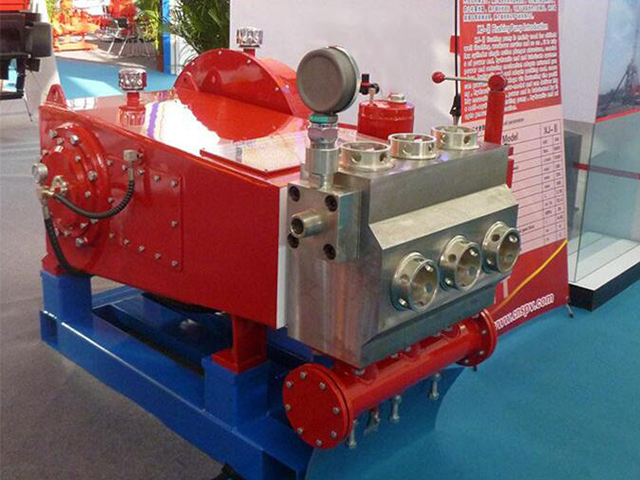
Record the existing installation and required service
Collect the pump model, serial reference, actual configuration and available manuals. Document the present pressure-flow duty, liquid, speed and operating hours, along with changes planned for the replacement. Do not assume the original pump was correctly selected for every current requirement. A replacement enquiry should distinguish verified installation information from dimensions or ratings still awaiting confirmation, so the new selection does not preserve an unresolved problem.
Provide mounting and drive drawings
Submit the base, hold-down, shaft, coupling and alignment information needed to assess the proposed replacement. Include elevation and service-clearance constraints. Ask the supplier to identify dimensions that are confirmed, require measurement or differ from the existing equipment. A nominally similar frame or shaft speed does not establish mechanical interchangeability. Record any permitted adapter, support or transmission changes and assign responsibility for their design before the purchase is approved.
Review the suction and discharge connections
Identify the existing piping interfaces, orientation, supported loads and connection standards. Provide the actual feed arrangement and downstream operating conditions. Ask for review of the replacement pump within that system, including changes in speed or displacement that may affect inlet behavior. Connecting an alternative pump to existing piping does not by itself establish acceptable feed conditions, pressure protection or mechanical loading at the new interfaces.
Check auxiliaries and control compatibility
List the lubrication, cooling, charge system, instruments, controls and driver equipment proposed for reuse. Confirm condition and capability against the selected replacement configuration. Identify changed operating limits and any modifications to alarms, trips or control sequences that require engineering review. A replacement described as bare-pump compatible can still require substantial supporting-system changes; those items need to be priced and assigned rather than discovered during the first site start.
Define verification and change acceptance
Request the supplier interface drawing, duty confirmation and a deviation register before manufacture. Agree dimensional checks and configuration-specific factory tests, then identify site installation and commissioning responsibilities. Keep the final replacement bill of materials and drawings with the equipment records. Where an alternative design is offered, use a documented engineering acceptance process instead of calling it a direct replacement without evidence covering the actual installed arrangement.
Compare the installed replacement cost
Include adapters, piping changes, electrical work, control updates, lifting, alignment, testing and initial spares in the purchase comparison. Distinguish required work from optional improvements and record any unresolved site measurements. A lower pump price can be offset by changes outside the vendor scope. Keep a controlled interface register through installation and handover so the delivered configuration, approved modifications and future spare references remain consistent after the old pump is removed from service.
Put these items side by side in the bid review
| Purchase item | Question to resolve | Evidence to request |
|---|---|---|
| Fit | Which dimensions are verified? | Accepted replacement drawing |
| Reuse | Which auxiliaries remain suitable? | Condition and capacity review |
| Changes | Who approves and supplies modifications? | Deviation and responsibility register |
Suggested wording for the quotation request
Please propose a replacement triplex pump using the attached duty, existing equipment records and installation drawings. Confirm mounting, shaft, drive and piping interfaces, required feed conditions and auxiliary-system compatibility. Identify verified dimensions, unresolved measurements and all modifications. Submit the accepted operating envelope, deviation register, factory verification and site commissioning scope. Separate pump price from integration work and do not claim direct interchangeability without the documented interface review.
Evaluate the offered pump within its complete operating system: feed supply, pressure piping, prime mover, lubrication, controls and maintenance access. Record the liquid properties, simultaneous pressure and flow points, speed range and expected running hours. Keep the accepted limits and supporting drawings with the purchase order. A bare-pump rating does not establish the capability of the installed package or every possible fluid. Qualified personnel must follow the supplied instructions and approved site procedures for installation, testing and service.
For the wider equipment scope, consult the Oilfield Triplex Plunger Pump: Configuration Guide. Use the RFQ checklist to collect the supporting documents before requesting a configuration-specific quotation.
Buyer questions
Is equal power enough to choose a replacement?
No. Duty, speed, mounting, shaft and piping interfaces, support systems and installation limits must also be reviewed.
Can existing auxiliary systems automatically be reused?
No. Their condition, capacity and compatibility must be checked for the selected replacement configuration.
Background and supplier contact
Reciprocating-pump reference documents offers related background, not certification of the equipment in a quotation. Applicability must be checked for the project and destination.
Explore the oilfield triplex plunger pump, browse all technical resources, or visit Vance Petroleum for company information. Request a pump proposal with the liquid analysis, pressure-flow duty and package requirements.