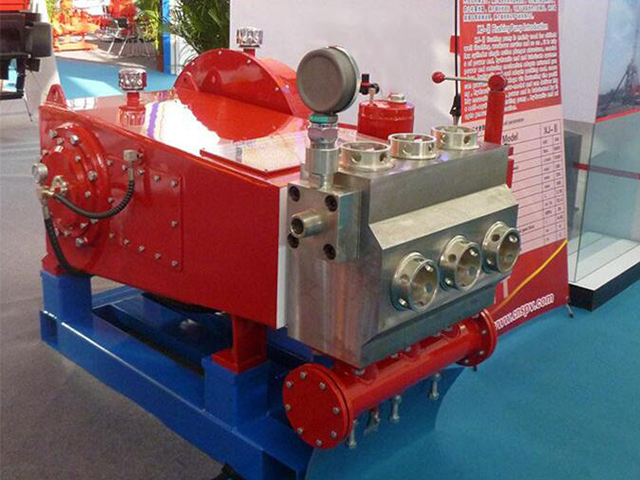
Separate the different lubrication functions
Identify the power-end oil system and any separate packing lubrication or flushing arrangement required by the selected pump. Ask for the approved fluids and the purpose of each circuit. A product described as pump oil may refer to the crankcase without addressing packing requirements. Keep fluid identification and component compatibility tied to the supplier instructions rather than choosing a substitute solely from a broadly similar viscosity or marketing label.
Review every operating state
Give the supplier the starting, running, low-speed, standby and stopping conditions expected for the package. Ask how lubrication is established and monitored in those states, particularly when auxiliary pumps depend on main-drive speed. Include cold ambient and restart cases where relevant. The ability to lubricate a pump at normal operating speed does not prove that the arrangement supports every proposed sequence or environmental condition.
Confirm the heat-removal boundary
Provide ambient conditions and available cooling utilities or installation constraints. Ask the supplier to identify the cooler, reservoir and circulation equipment included in the selection. Confirm any dependence on site water, ventilation or electrical supplies. A bare-pump offer may exclude the equipment needed to maintain the accepted operating conditions, while a packaged offer may still assume utilities that are not actually available at the destination.
Include filters, instruments and protective responses
Request the circuit drawing, filter arrangement and specified monitoring points. Clarify how oil pressure, temperature and other relevant conditions are evaluated and which responses are required by the selected design. Ask for the limits and instructions from the responsible supplier instead of transferring settings from a different pump. Confirm access for routine service and the identification of consumable elements so maintenance does not depend on unverified local equivalents.
Make initial fill and handover responsibilities explicit
State whether approved lubricants, initial fill, filters and commissioning consumables are included or supplied by the purchaser. Ask how factory preservation differs from operating fill and what checks are needed after transport. Include sampling or service requirements where specified by the manufacturer. Agreement on fluids and handover condition prevents a package from reaching site with unclear responsibility for the first start and no confirmed source for the accepted lubricant.
Do not prescribe a universal oil or service interval
Request the instructions applicable to the exact power end and environment. Keep the approved lubricant identification, alternatives, fill information and change criteria with the delivered documents. The same nominal oil grade can differ in properties relevant to the application, and a fixed change interval copied from another manufacturer may not apply. Where local availability is important, submit proposed alternatives for written review before purchase and maintain traceability when the lubricant or operating duty changes.
Put these items side by side in the bid review
| Purchase item | Question to resolve | Evidence to request |
|---|---|---|
| Circuits | Which functions have separate supplies? | Approved circuit drawing |
| Modes | How is lubrication supported at low speed? | Operating-state review |
| Utilities | Which cooling resources are assumed? | Heat-removal and utility schedule |
Suggested wording for the quotation request
Please define the lubrication and cooling scope for the selected triplex pump, including power-end and packing circuits where required. Review the attached operating states, ambient conditions and utilities. Identify approved fluids, auxiliary drives, reservoirs, filters, coolers, instruments and protective responses. State initial-fill and preservation responsibilities, service instructions and consumable references. List purchaser-supplied utilities and any limits affecting starting, low-speed operation or continuous duty.
Evaluate the offered pump within its complete operating system: feed supply, pressure piping, prime mover, lubrication, controls and maintenance access. Record the liquid properties, simultaneous pressure and flow points, speed range and expected running hours. Keep the accepted limits and supporting drawings with the purchase order. A bare-pump rating does not establish the capability of the installed package or every possible fluid. Qualified personnel must follow the supplied instructions and approved site procedures for installation, testing and service.
For the wider equipment scope, consult the Oilfield Triplex Plunger Pump: Maintenance Guide. Use the RFQ checklist to collect the supporting documents before requesting a configuration-specific quotation.
Buyer questions
Can one generic pump oil be specified for every circuit?
No. Follow the configuration-specific instructions for the power end and any separate packing or flushing system.
Should auxiliary lubrication be checked at low speed?
Yes. The supplier must confirm how the accepted lubrication requirements are met throughout the proposed operating states.
Background and supplier contact
Reciprocating-pump reference documents offers related background, not certification of the equipment in a quotation. Applicability must be checked for the project and destination.
Explore the oilfield triplex plunger pump, browse all technical resources, or visit Vance Petroleum for company information. Request a pump proposal with the liquid analysis, pressure-flow duty and package requirements.