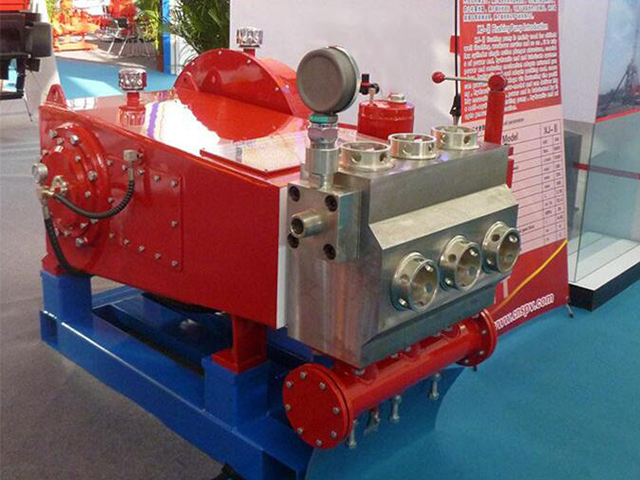
List operating points rather than separate maxima
Start with the actual process cases: normal delivery, highest required pressure, maximum flow and any low-rate operation. Enter pressure and flow together for each case and identify where they are measured. A maximum pressure beside a maximum capacity does not show that both are available simultaneously. State the liquid temperature and expected inlet condition alongside each operating point so the supplier can review one coherent duty.
Tie the duty to a selected pumping configuration
Ask the supplier to identify the offered frame, stroke, plunger diameter, fluid end and operating speed. Require the applicable envelope for that combination rather than a range covering several alternatives. A change of plunger diameter can alter the pressure and displacement relationship, but it also requires review of permitted rod load, speed and power. An accepted selection should remain traceable to its particular component arrangement.
Include time at load and changes in service
Describe how long each point lasts, the daily running hours and the expected starts, stops and changes between stages. Distinguish short well-service operations from extended injection duty. Where future fluids or operating modes are planned, list them separately and request a supported option rather than silently including them in the base rating. This prevents an occasional operating case from being mistaken for a continuously available capability.
Draw the boundary around the complete package
Specify whether the enquiry covers a bare pump or a package with drive, feed supply, lubrication, cooling and controls. Locate suction and discharge battery limits on a simple sketch. State utilities available at those limits and identify purchaser-supplied equipment. An apparently lower price may exclude equipment essential to achieving the agreed duty; a scope table makes those exclusions visible before the commercial comparison is finalized.
Accept evidence that corresponds to the order
Request a signed selection sheet referencing the offered configuration and operating cases. Agree which cases will be demonstrated at the factory, what test liquid will be used and which conditions require calculation or engineering review instead. Keep assumptions, deviations and test exclusions attached to the proposal. A general catalogue curve can support preliminary screening, but it should not replace the configuration-specific documents accepted for the purchase.
Keep one controlled duty schedule
Give the schedule a revision identifier and use it across technical clarification, commercial evaluation and order placement. When a supplier proposes a different speed, fluid end or plunger size, require an updated selection and identify the consequences for interfaces and spares. Record the accepted deviations explicitly. The objective is a repeatable pumping service under stated conditions, not a catalogue maximum that cannot be connected to the actual project.
Put these items side by side in the bid review
| Purchase item | Question to resolve | Evidence to request |
|---|---|---|
| Operating point | Are pressure and flow simultaneous? | Configuration-specific selection sheet |
| Duration | Is this continuous or intermittent? | Accepted load schedule |
| Package boundary | Which support systems are included? | Battery-limit drawing |
Suggested wording for the quotation request
Please quote a triplex plunger pump against the attached revision-controlled pressure-flow schedule. Identify the offered frame, stroke, plunger size, speed range, fluid end and drive requirements. State the accepted liquid and inlet assumptions, duration limits, package boundaries and deviations. Separate included factory demonstrations from calculated checks and submit the evidence and documentation required for approval before the equipment order.
Evaluate the offered pump within its complete operating system: feed supply, pressure piping, prime mover, lubrication, controls and maintenance access. Record the liquid properties, simultaneous pressure and flow points, speed range and expected running hours. Keep the accepted limits and supporting drawings with the purchase order. A bare-pump rating does not establish the capability of the installed package or every possible fluid. Qualified personnel must follow the supplied instructions and approved site procedures for installation, testing and service.
For the wider equipment scope, consult the Oilfield Triplex Plunger Pump: Specs and Sizing. Use the RFQ checklist to collect the supporting documents before requesting a configuration-specific quotation.
Buyer questions
Can catalogue maxima be used as the purchase duty?
Only when the supplier confirms that the selected configuration supports the required pressure and flow together, at the stated speed, liquid conditions and duration.
What should change when a different plunger is offered?
Request an updated operating envelope and review rod load, power, speed, packing, fluid-end compatibility and the consequences for the installed package.
Background and supplier contact
Reciprocating-pump reference documents offers related background, not certification of the equipment in a quotation. Applicability must be checked for the project and destination.
Explore the oilfield triplex plunger pump, browse all technical resources, or visit Vance Petroleum for company information. Request a pump proposal with the liquid analysis, pressure-flow duty and package requirements.