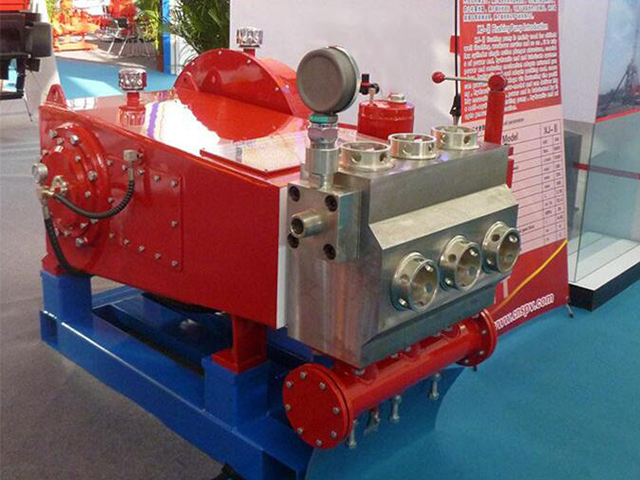
Identify the equipment included in the test
Reference the ordered pump, plunger size, fluid end, drive and supplied auxiliaries in the test plan. State whether the demonstration covers the bare pump or the assembled package. Identify temporary factory equipment and any components not present. Without that boundary, a successful run can be misinterpreted as evidence for controls, cooling or feed equipment that were not part of the tested arrangement.
Select representative operating points
Use the accepted duty schedule to agree pressure, flow, speed and duration at the relevant cases. Request the test liquid and inlet conditions and identify differences from actual service. Maximum-pressure and maximum-flow demonstrations performed separately should not be treated as proof that those values are available together. Where a required case cannot be demonstrated at the factory, agree the alternative evidence and site verification responsibility in advance.
Define measurements and acceptance criteria
Agree the measured quantities, instrument identification, data recording and acceptance criteria appropriate to the purchase specification. Clarify the measurement locations and what equipment is included in power or efficiency figures. Ask the responsible parties to review the method before testing. A video of running equipment may support identification, but it does not replace the agreed measurements or establish performance outside the conditions recorded in the formal test report.
Separate different types of verification
Distinguish dimensional inspection, pressure-containing component tests, functional checks and running performance. Each addresses different acceptance questions. Identify lubrication, cooling, protective interfaces and control sequences included in integrated checks where those systems are supplied. A hydrostatic test is not a substitute for a pumping performance demonstration, and a no-load run does not establish every load-dependent operating capability advertised for the complete configuration.
Control deviations and release documents
Agree how failed points, unexpected observations and changed test conditions will be recorded and resolved. Identify witness arrangements, report approval and any retest requirements before shipment. Request final configuration records linked to the serial identifiers of the delivered equipment. Release should be based on the accepted evidence and closed deviations, not simply on attendance at the factory or receipt of a generic test certificate.
Keep limits of evidence explicit
Where water is used to test equipment intended for another liquid, ask the supplier to state what the test demonstrates and what remains subject to compatibility or application review. Do the same for substituted drivers, temporary feed systems and different ambient conditions. Record any accepted calculations and site demonstrations separately. This allows the purchaser to use factory evidence appropriately without turning a bounded test into an unsupported claim about all future fluids, installations or operating modes.
Put these items side by side in the bid review
| Purchase item | Question to resolve | Evidence to request |
|---|---|---|
| Configuration | Does the test match the supplied assembly? | Serial-linked test plan |
| Performance | Which simultaneous duty points are demonstrated? | Approved measurement schedule |
| Release | How are deviations closed? | Accepted report and action register |
Suggested wording for the quotation request
Please submit a factory acceptance proposal for the ordered triplex configuration. Identify tested equipment, temporary systems, test liquid, inlet conditions and simultaneous pressure-flow-speed points with duration. Define measurements, acceptance criteria, functional checks and document deliverables. Separate pressure tests from running performance and identify untested service conditions. State witnessing, deviation closure and retest arrangements, with any required site verification assigned before shipment approval.
Evaluate the offered pump within its complete operating system: feed supply, pressure piping, prime mover, lubrication, controls and maintenance access. Record the liquid properties, simultaneous pressure and flow points, speed range and expected running hours. Keep the accepted limits and supporting drawings with the purchase order. A bare-pump rating does not establish the capability of the installed package or every possible fluid. Qualified personnel must follow the supplied instructions and approved site procedures for installation, testing and service.
For the wider equipment scope, consult the Oilfield Triplex Plunger Pump: FAT Checklist. Use the RFQ checklist to collect the supporting documents before requesting a configuration-specific quotation.
Buyer questions
Does a hydrostatic test demonstrate delivered flow?
No. It addresses a different verification scope; running performance requires agreed operating points and measurements.
Can factory water tests establish suitability for every process liquid?
No. Chemical compatibility, solids behavior and service-specific conditions require their own review and supporting evidence.
Background and supplier contact
Reciprocating-pump reference documents offers related background, not certification of the equipment in a quotation. Applicability must be checked for the project and destination.
Explore the oilfield triplex plunger pump, browse all technical resources, or visit Vance Petroleum for company information. Request a pump proposal with the liquid analysis, pressure-flow duty and package requirements.